Key takeaways
- Learn to answer "will you require sponsorship?" in two sentences — most students lose opportunities by answering it badly, not by needing sponsorship.
- Use public H-1B disclosure data to find employers with an actual sponsorship track record instead of guessing.
- A U.S. résumé is one page, has no photo or personal details, and quantifies outcomes rather than listing duties.
- Start networking a year before you need a job. Referrals move applications past filters that reject international candidates by default.
International students compete for the same jobs as domestic candidates while carrying extra constraints — work authorization deadlines, sponsorship questions, and a résumé format that may be entirely different from the one used at home. None of that is insurmountable. These are the ten adjustments that make the largest practical difference.
1. Learn to answer the sponsorship question well
Nearly every U.S. application asks some version of "Will you now or in the future require sponsorship for employment visa status?" Answer honestly — misrepresenting this is grounds for rescinding an offer and can carry immigration consequences. But answer completely.
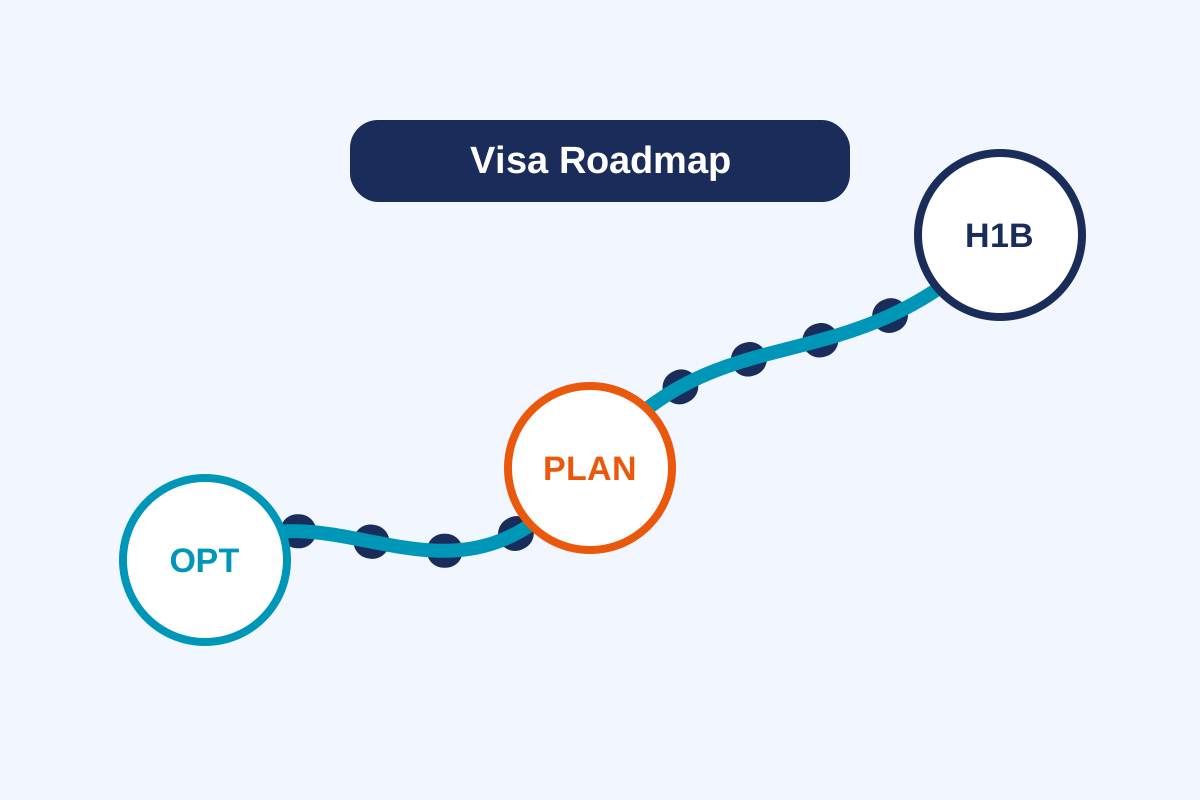
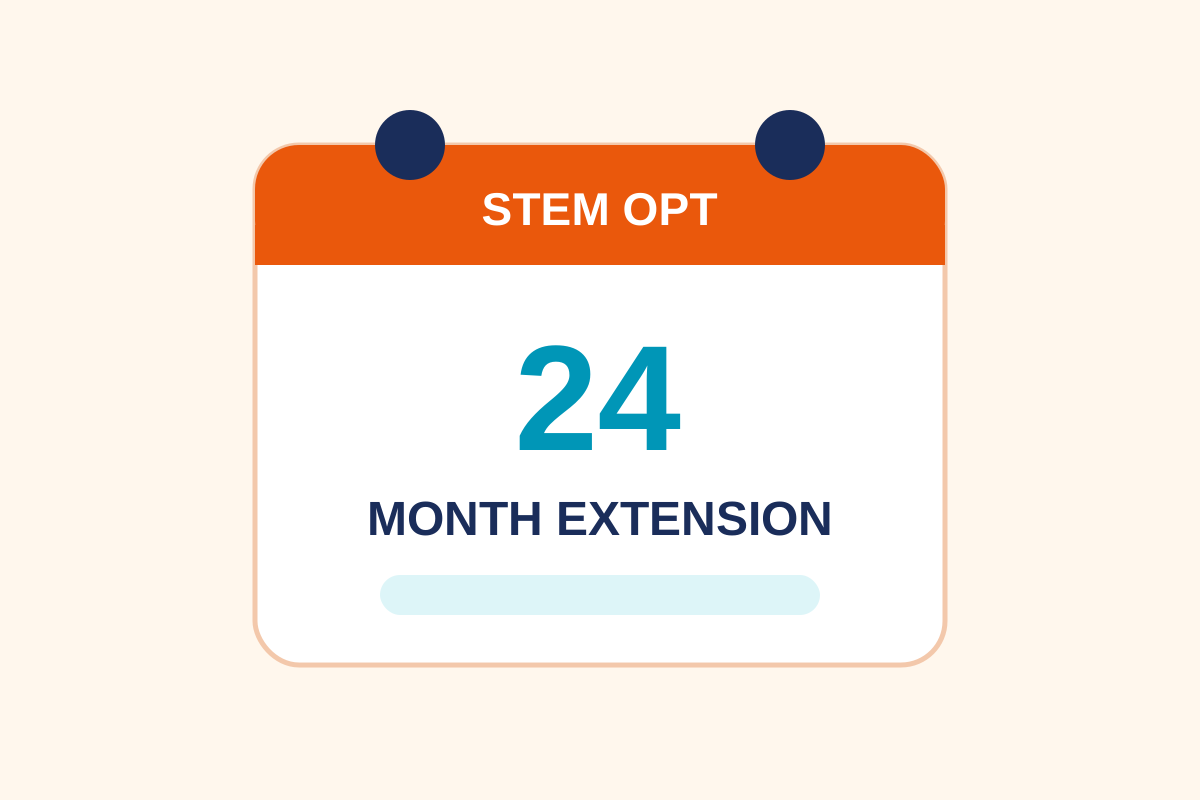
A bare "yes" makes a recruiter imagine immediate legal costs. A useful answer sets out the timeline: that you are authorized to work now under OPT, that a STEM extension carries you to 36 months without any employer filing, and that sponsorship would not arise for roughly three years. That is a materially different proposition, and many recruiters simply do not know it.
2. Find employers who actually sponsor
Stop guessing. The Department of Labor publishes LCA disclosure data and USCIS operates an H-1B Employer Data Hub — both searchable by employer, job title, location, and year. If a company has filed dozens of petitions for roles like yours, they have counsel, a process, and precedent. If they have never filed, you would be asking them to build all three for you.
Build a target list of 40–60 employers with a demonstrated record in your field and region. A focused list beats several hundred untargeted applications.
3. Write a U.S.-style résumé
- One page for students and early-career candidates. Two only with substantial experience.
- No photograph, date of birth, marital status, nationality, or gender — including these can actually disqualify you, because U.S. employers avoid perceived discrimination exposure.
- Quantify outcomes: "cut report generation time 40% by automating an ETL pipeline," not "responsible for reporting."
- Mirror the vocabulary of the job posting; applicant tracking systems match on terms.
- Standard fonts, clean structure, no columns or graphics that parsers mangle.
- American spelling and MM/DD/YYYY dates.
4. Network a year before you need it
Referrals are how most roles are actually filled, and they are especially valuable to international candidates because a referral routes your application around filters that screen out sponsorship-requiring applicants by default.
Ask for informational conversations, not jobs. A fifteen-minute call about someone's work is easy to say yes to; "can you refer me" from a stranger is easy to ignore. Alumni from your program are the single warmest audience available to you — most universities give students access to an alumni directory and almost nobody uses it.
5. Make your LinkedIn profile do the work
- Headline that states what you do, not your student status: "Data Analyst | SQL, Python, Tableau" beats "MS student seeking opportunities."
- Location set to where you want to work, not where you are from.
- A short About section written in the first person.
- Skills filled out — recruiters search on them directly.
- A clear professional photo.
6. Know your own work authorization cold
You will meet recruiters who do not know the difference between OPT and H-1B, and hiring managers who have never hired an international candidate. Being able to explain your status clearly and confidently turns you into the person solving the problem rather than the person presenting one. Know your OPT end date, your STEM eligibility, your unemployment day count, and your cap-gap position at all times.
7. Build public proof of your work
Employers discount unfamiliar universities and foreign work experience — not always fairly, but consistently. Public artifacts neutralize that. A GitHub with real projects, a portfolio site, published writing, a Kaggle record, or contributions to an open-source project all serve as evidence that does not require the reader to know your school.
8. Prepare for behavioral interviews specifically
U.S. interviews lean heavily on behavioral questions — "tell me about a time you disagreed with a teammate." The expected structure is STAR: situation, task, action, result. Students from education systems that reward modesty often under-claim their contributions here. Saying "I designed and built it" when you did is accurate, not boastful, and interviewers calibrate against candidates who state their role plainly.
9. Use campus career services early
Career centers run résumé reviews, mock interviews, employer sessions, and job boards where employers have already self-selected as open to student hiring. It is included in what you are paying and it is chronically underused. Go in your first semester, not your last.
10. Plan your search around the visa calendar
H-1B registration happens in March, with employment starting the following October. For your employer to register you, you generally need to be hired the preceding fall. Working backwards: begin serious applications 12–15 months before you need H-1B status.
Students who start searching in their final OPT semester are typically a full cycle late — not because they were unqualified, but because the calendar had already closed. Map your dates once, early, and work backwards from them.
Frequently asked questions
- Should I say I need sponsorship on applications?
- Yes — always answer honestly. Misrepresenting your status can cost you the offer and carry immigration consequences. Where there is room, add context about your OPT and STEM OPT timeline so the recruiter understands nothing is required from them for up to three years.
- How do I find companies that sponsor H-1B visas?
- Search the USCIS H-1B Employer Data Hub and Department of Labor LCA disclosure data. Both are free, public, and searchable by employer, occupation, and location.
- Can I work while studying on an F-1 visa?
- On-campus employment is generally permitted within hour limits. Off-campus work requires authorization — CPT while enrolled, or OPT typically after completing your program. Never work off-campus without authorization from your DSO.
- Do unpaid internships count toward my OPT unemployment limit?
- Volunteer or unpaid work can count as employment for OPT purposes if it is at least 20 hours per week, directly related to your field, and properly documented. Confirm with your DSO before relying on it.
- Is it worth applying to companies that say they do not sponsor?
- Sometimes. Policies vary by team and change with hiring conditions, and some "no sponsorship" statements really mean "no immediate sponsorship" — which your OPT already covers. It is worth asking, but do not let it displace your targeted list.
Official sources
About the author
CPTGuru Team — The CPTGuru editorial team works with career advisors and international student services professionals across U.S. universities.
Disclaimer: This article is general information about U.S. immigration regulations and is not legal advice. Immigration rules change frequently and apply differently to individual circumstances. Verify current requirements with official government sources and consult a licensed immigration attorney or your Designated School Official before acting on anything you read here. Last reviewed April 20, 2026.